Bone fractures are a very common injury seen across all age groups. No matter what the cause was, fractures always require timely diagnosis and proper treatment to prevent long-term complications.
Understanding the type of fractures, the symptoms, and the available treatment options can help patients manage the injury effectively and make a faster recovery.
In this blog, we will understand everything about bone fractures. Let’s begin!
What is a Bone Fracture?
A bone fracture is a break or crack in the bone that occurs when external force exceeds the bone’s strength. Fractures can be caused by accidents, falls, or sports injuries. In some cases, fractures occur even with minimal trauma due to underlying conditions like osteoporosis, bone tumors, or infections that reduce bone density and strength. Some fractures heal easily, while others may require surgery, depending on severity.
Causes of Bone Fractures
Fractures generally occur due to:
- Trauma: Accidents, falls, or sports injuries are the most common causes of fractures. These usually result in sudden and severe breaks.
- Repetitive Load on Bones: Athletes and runners often experience stress fractures due to repetitive load and stress on the bone over time.
- Medical Conditions: Conditions like osteoporosis, bone cancer, and infections weaken bones, making them more prone to breaking even with minimal force.
What are the Different Types of Bone Fractures?
There are many different types of fractures based on their characteristics, location, and severity:
- Simple (Closed) Fracture: In this type of fracture, the bone breaks but does not pierce the skin. These fractures may still be painful and require immobilization to heal.
- Compound (Open) Fracture: In this type of fracture, the bone breaks and pierces the skin, which increases the risk of infection.
- Transverse Fracture: A straight horizontal break across the bone.
- Oblique Fracture: The break occurs at an angle across the bone, often caused by a sudden twisting motion.
- Spiral Fracture: A fracture that spirals around the bone, often occurs due to a twisting force.
- Communited Fracture: The bone breaks into three or more pieces.
What are the Symptoms of Bone Fractures?
Bone fracture symptoms may vary depending on the type of fracture, but common signs include:
- Intense pain that worsens with movement
- Immediate swelling and bruising of the injured area
- Visible deformity
- Unable to move the affected part or bear weight on it
- A grinding or crackling sound when moving the bone
How are Bone Fractures Diagnosed?
To confirm a fracture and its extent, the doctors will do a few imaging tests:
- X-rays: To check how damaged the bones are
- CT Scan: Provides detailed images of bones and the surrounding tissue. It is useful for complex fractures.
- MRI: Provides detailed images of soft tissues like cartilage and ligaments around the bones.
- Bone Scan: It is used to find fractures that don’t show up on an X-ray.
Treatment Options for Bone Fractures
The treatment depends on the type, location, and severity of the fracture. Different treatment options are:
Immobilization
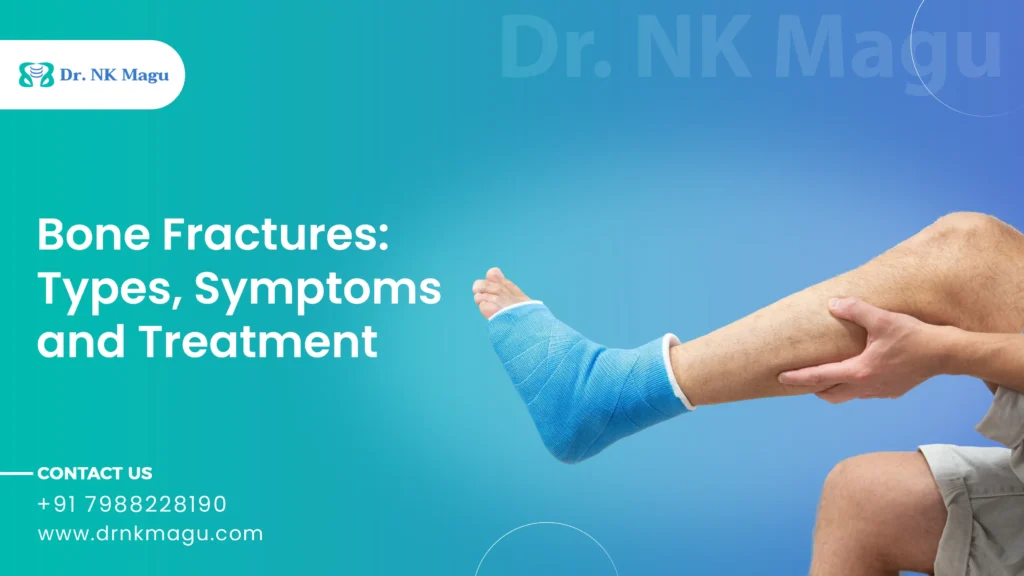
If the fracture is mild and the bones have not moved far out of place, it can be healed with immobilization. Casts, splints, and braces can be used for several weeks to keep the bones aligned and prevent movement during the healing process.
Closed Reduction
If the bone is displaced, a closed reduction is required to realign the bones. It is a non-surgical procedure in which the provider will physically push and pull the patient’s body on the outside to line up the broken bones inside. The procedure is performed under local or general anesthesia.
Surgery
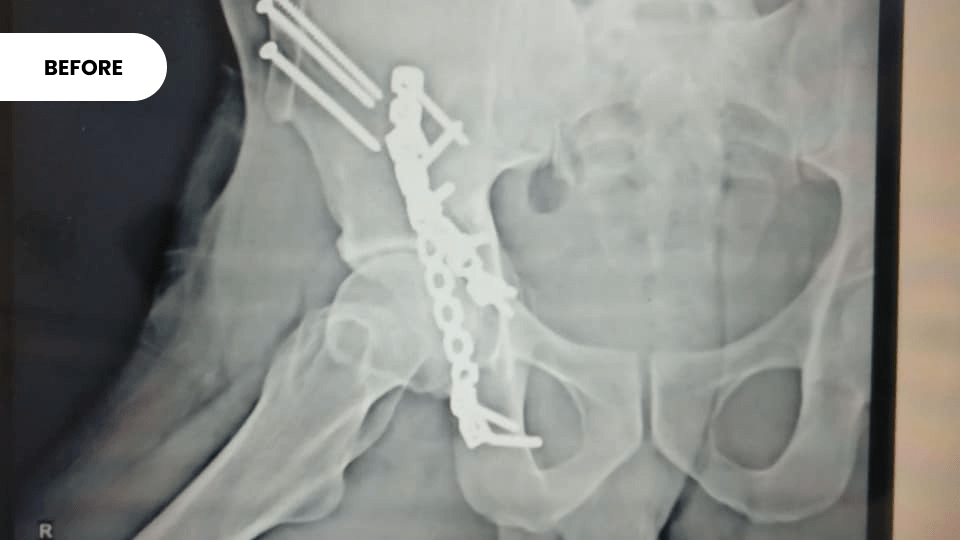
Surgery is generally required in complex, comminuted, or compound fractures. Plates and screws are used to hold broken bone fragments together internally, providing strong support. Rods or nails are inserted inside the bone’s cavity, often in long bones like the femur or tibia, to keep the bone aligned from within.
In some severe cases, external fixation frames are applied outside the body, using pins and rods to hold the bone in place.
Physiotherapy and Medications
Once the bone begins healing, regular physiotherapy is required to regain strength, range of motion, and flexibility. Early physiotherapy helps prevent stiffness and muscle loss. Pain relievers and anti-inflammatory drugs help manage symptoms. Antibiotics may be necessary for open fractures to prevent infection.
Healing time for bone fractures varies depending on age, health, and severity of the fracture. On average, children take 3-6 weeks, adults take 6-12 weeks, and older patients may take a longer recovery time.
Conclusion
Bone fractures are common but manageable injuries if they get timely and appropriate care. Understanding the types of fractures, their symptoms, and treatment options can greatly help patients make informed decisions and ensure a smooth recovery. Most people who have fractures can make a full recovery and can resume their normal activities with no long-term impacts.